Building a web application has never been more accessible or more complex. Modern frameworks like React, Angular, and Vue have transformed how businesses build digital products, enabling faster development, richer user experiences, and applications that scale with business growth. But choosing a framework is only one part of the equation.
Successful web applications don’t begin with code. They begin with a clear strategy, thoughtful planning, and a structured development process that aligns technical decisions with business goals. Organizations that treat web app development as a strategic initiative consistently launch products faster, reduce technical debt, and create better experiences for their users.
This web app development guide walks through the complete process from planning and technology selection to design and development, providing a practical framework for businesses preparing to build their first web application or modernize an existing one.
What Is Web App Development?
Web application development is the process of designing, building, deploying, and maintaining software applications that run in a web browser. Unlike traditional websites, web applications are interactive, data-driven, and designed to perform tasks such as managing projects, processing payments, collaborating with teams, or delivering software as a service (SaaS).
A successful web application combines intuitive user experience, scalable architecture, secure infrastructure, and reliable performance, all working together to solve a real business problem. Examples include:
- Customer relationship management (CRM) systems
- Project management platforms
- E-commerce portals
- Booking systems
- Healthcare dashboards
- Learning management systems
- Enterprise business applications
Understanding the Web App Development Lifecycle
Every successful project follows a structured web app development lifecycle. Rather than viewing development as a single phase, experienced engineering teams divide the process into manageable stages that reduce risk and improve product quality. Those that jump straight into development often encounter missed deadlines, escalating costs of web app development, and products that fail to meet market expectations. Each stage builds upon the previous one, allowing teams to validate assumptions before investing significant development effort.
The life cycle typically includes:
- Planning
- Requirements gathering
- UI/UX design
- Architecture planning
- Frontend development
- Backend development
- Testing and quality assurance
- Deployment
- Maintenance and continuous improvement
Step 1: Planning a Web Application
Every successful product starts with planning a custom web application around business objectives not technology preferences.
Before choosing React, Angular, or Vue, answer these questions:
- What business problem are we solving?
- Who are the primary users?
- What workflows will the application support?
- How will success be measured?
- What systems need to integrate with the application?
Skipping this planning phase often leads to feature creep, budget overruns, and products that fail to satisfy users. These become the foundation for every development decision that follows.
A planning workshop should produce:
- Business objectives
- User personas
- Core workflows
- Functional requirements
- Technical constraints
- Success metrics
Step 2: Choose the Right Frontend Framework
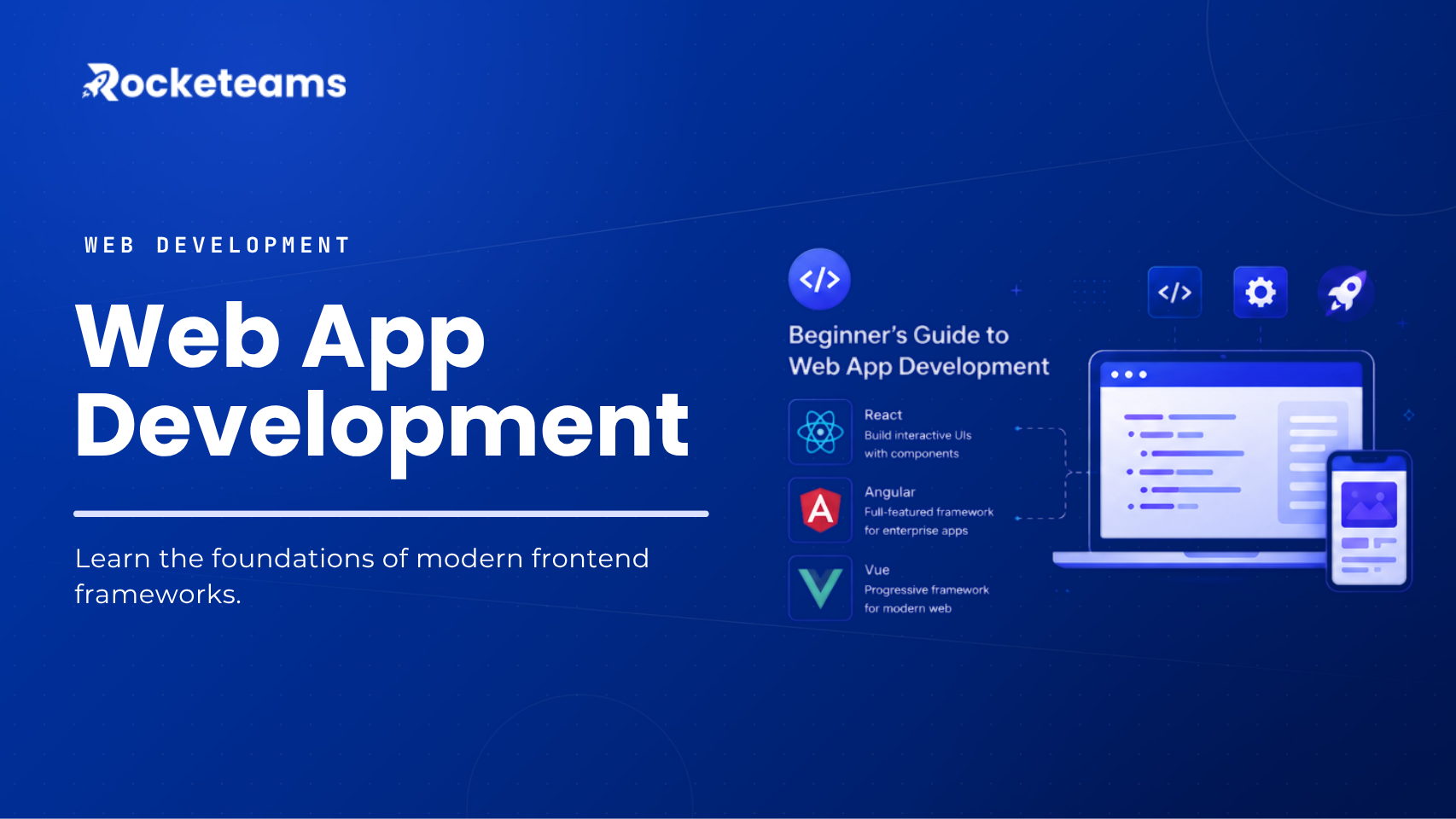
One of the biggest decisions in any step-by-step web app development process is selecting the frontend framework. Although React, Angular, and Vue solve similar problems, each serves different project requirements.
-
React
React is a JavaScript library developed for building highly interactive user interfaces. It excels at:
- SaaS products
- Enterprise dashboards
- Customer portals
- Large-scale applications
- Fast user interactions
Its massive ecosystem and reusable component architecture make React one of the most popular choices for startups and enterprises alike. Choose React if flexibility, scalability, and community support are top priorities.
-
Angular
Angular is a complete frontend framework that includes routing, dependency injection, testing tools, and application architecture out of the box. Angular’s opinionated structure encourages consistency across large engineering teams, making it easier to maintain long-term projects. It performs particularly well for:
- Enterprise software
- Banking applications
- Government platforms
- Large internal systems
- Complex business logic
-
Vue
Vue offers a lightweight, approachable alternative with a gentle learning curve. Vue enables developers to ship products quickly while maintaining excellent performance and clean code. It works well for:
- MVPs
- Startup applications
- Small-to-medium business platforms
- Progressive enhancement
- Rapid product development
How to Choose Web App Features?
A common mistake is attempting to build every feature before launch. Instead, prioritize features according to business value. When choosing web app features, classify them into three categories:
Must-Have Features
These solve the primary business problem. Without these, the product cannot function. Examples include:
- User authentication
- Dashboard
- Database integration
- Search
- User profiles
Should-Have Features
These improve usability but are not essential for launch. These typically appear in later development phases. Examples include:
- Notifications
- Analytics
- Dark mode
- Role management
- Reporting
Nice-to-Have Features
These enhance user experience but shouldn’t delay the initial release. Launching an MVP first allows businesses to validate demand before investing heavily in additional functionality. Examples include:
- AI recommendations
- Advanced personalization
- Gamification
- Chatbots
- Integrations with niche platforms
Design Principles You Must Follow to Build A Successful Web App
Great software isn’t measured solely by its code quality. User experience determines whether people continue using it. Effective web app design principles include:
-
Simplicity
Every interface should make completing tasks effortless. Remove unnecessary screens, buttons, and interactions.
-
Consistency
Navigation, colors, typography, layouts, and interactions should remain predictable throughout the application. Consistency reduces cognitive load and improves usability.
-
Accessibility
Applications should accommodate users with diverse abilities by supporting keyboard navigation, readable typography, sufficient color contrast, and screen readers. Accessibility isn’t optional; it expands your audience while supporting regulatory compliance.
-
Performance
Users expect applications to respond instantly. Optimizing page speed, minimizing JavaScript bundles, lazy loading assets, and caching frequently accessed data significantly improve user satisfaction.
-
Mobile Responsiveness
Modern users frequently switch between desktops, tablets, and smartphones. Responsive design ensures the application performs seamlessly across every device.
How to Build a Web App Development? – The Roadmap
Once planning and design are complete, organizations should create a structured web app development roadmap. Rather than treating development as one large project, divide it into manageable milestones. By following a structured roadmap, organizations gain greater visibility into timelines, budgets, resource allocation, and project risks, making it easier to deliver a successful product on schedule.
Discovery
- Market research
- User interviews
- Competitor analysis
- Technical feasibility
- Requirements gathering
Design
- Wireframes
- User journeys
- High-fidelity UI
- Design system
- Prototype testing
Phase 3: Architecture
Before writing production code, engineers establish:
- Database structure
- API architecture
- Authentication
- Hosting environment
- Security model
- CI/CD pipeline
Phase 4: Development
Frontend and backend teams work simultaneously, integrating APIs, implementing business logic, and validating functionality through continuous testing. Using Agile methodologies allows incremental releases, faster feedback, and improved collaboration between engineering and business stakeholders.
Phase 5: Follow Web App Development Best Practices
The difference between a web application that survives a few months and one that supports thousands of users for years often comes down to development discipline. Following proven web app development best practices and trends helps teams reduce technical debt, improve maintainability, and create a stronger foundation for future growth.
Phase 6: Prioritize Security Early
Security should never be treated as a post-launch feature. Modern web applications must protect user data, prevent unauthorized access, and comply with industry regulations. Security best practices include:
- Secure authentication and authorization
- Data encryption
- Regular vulnerability testing
- Secure API development
- Role-based access controls
- Infrastructure monitoring
Phase 7: Maintain Clean and Modular Code
As applications grow, code complexity increases. Modular architecture, reusable components, and consistent coding standards make applications easier to maintain, test, and scale. Engineering teams should establish coding conventions early and enforce them through code reviews and automated quality checks.
Phase 8: Quality Assurance and Testing
No web app development guide is complete without a strong testing strategy. Even the most elegant application can fail if users encounter bugs, crashes, or performance issues. Quality assurance ensures that functionality, security, usability, and performance meet expectations before launch. Testing should occur throughout development not only at the end.
Phase 9: Web App Deployment Guide
Development is only part of the journey. A successful launch requires a structured web app deployment guide that minimizes risk and ensures stability. Deployment involves moving the application from development environments into production where users can access it.
Key deployment activities include:
- Infrastructure provisioning
- Database migration
- Environment configuration
- Security verification
- Performance validation
- Monitoring setup
Phase 9: Scaling a Web Application
Growth is the goal of most digital products. However, success creates new technical challenges. Scaling a web application requires preparing infrastructure, architecture, and engineering processes for increased demand.
Why Does Engineering Talent Determine Success?
Every business wants to launch a successful web application. Yet many projects fail despite having strong ideas, sufficient funding, and market demand.
The most common reason is execution.
Choosing React, Angular, or Vue is important. Defining a roadmap matters. Planning features carefully helps. But none of these decisions create value without the engineering expertise required to execute them effectively.
Building production-grade web applications requires experienced frontend developers, backend engineers, DevOps specialists, QA professionals, and product-focused technical leadership. Hiring these roles individually can take months and significantly delay product timelines.
Rocketeams provides businesses with pre-vetted engineering talent that integrates directly into existing teams and projects. Whether you’re building an MVP, scaling a SaaS platform, modernizing enterprise software, or accelerating a product roadmap, our engineers contribute immediately with experience across React, Angular, Vue, Node.js, cloud infrastructure, DevOps, and modern web technologies.
Instead of spending months recruiting, businesses gain access to top engineering talent in under 100 hours, allowing product development to move forward without delay.
Conclusion
Every successful web application begins with a clear understanding of the problem it solves.
The organizations that consistently launch high-performing products follow a structured process: planning strategically, selecting the right technology stack, designing around user needs, building scalable architectures, testing rigorously, and continuously improving after launch.
Frameworks such as React, Angular, and Vue provide powerful tools, but technology alone does not guarantee success. Success comes from combining the right technology decisions with experienced engineering execution.
Whether you’re building your first application or scaling an existing platform, a structured web app development roadmap provides the clarity needed to move from concept to launch with confidence.
If you’re ready to accelerate development, reduce hiring bottlenecks, and build a web application that supports long-term growth, Rocketeams can help.
From front-end specialists and full-stack developers to DevOps engineers and dedicated product squads, we provide the engineering talent needed to bring your web application vision to life.
FAQs
What are the essential steps involved in planning and executing a successful web application development project from concept to launch?
A successful project follows a structured process that includes planning, requirements gathering, design, architecture, development, testing, deployment, and ongoing optimization. Each phase reduces risk and ensures alignment with business goals.
How can your expertise help us navigate the complexities of technology selection, architecture design, and feature prioritization for our web app?
Our experienced engineers evaluate your business objectives, technical requirements, and growth plans to recommend the right technologies, architecture, and feature roadmap. This helps reduce development risks and accelerate delivery.
What documentation and deliverables can we expect at each stage of the web app development process to ensure transparency and control?
Typical deliverables include requirements documentation, user stories, wireframes, design prototypes, technical architecture plans, sprint reports, testing documentation, and deployment plans. These provide visibility throughout the project lifecycle.
How do you ensure that the developed web application aligns perfectly with our business objectives and delivers measurable ROI?
We begin by understanding your goals, users, and success metrics before development starts. Continuous stakeholder feedback and performance measurement ensure the application remains aligned with business outcomes.
What is your approach to quality assurance and testing throughout the web app development guide to guarantee a robust and bug-free product?
Quality assurance is integrated throughout development using automated testing, manual testing, performance testing, security assessments, and user acceptance testing. This approach helps identify issues early and maintain product quality.
Can you provide a tailored web app development roadmap that considers our industry, target audience, and competitive landscape?
Yes. Every roadmap is customized based on business objectives, market conditions, user expectations, technical requirements, and growth opportunities. This ensures development priorities support long-term success.
What post-launch strategies do you recommend for marketing, user adoption, and continuous improvement of our new web application?
Post-launch success depends on user onboarding, performance monitoring, customer feedback collection, feature iteration, and data-driven optimization. Continuous improvement helps maximize adoption, retention, and business value.