Most enterprise AI systems today still depend on humans to take action. An AI model generates a response, predicts an outcome, summarizes information, or recommends a decision. A person then reviews the output, decides what to do next, and manually executes the remaining steps.
That approach has delivered measurable value, but it also represents the current limitation of most AI deployments.
Agentic AI for business changes that model entirely.
Instead of generating outputs and waiting for human intervention, autonomous AI agents can pursue goals, take actions, interact with business systems, use tools, evaluate results, and complete multi-step workflows with minimal supervision. The shift is not from better answers to faster answers. It is from AI assistance to AI execution.
For businesses, that means customer requests can be resolved end-to-end, invoices can be processed automatically, IT incidents can be diagnosed and remediated, and operational workflows can run continuously without requiring human coordination at every stage.
The implications are significant. Agentic systems are moving AI from a productivity tool into an operational capability.
Why Businesses Are Moving Beyond Traditional AI?
The first wave of enterprise AI focused primarily on assistance. Organizations deployed:
- AI chatbots
- Document summarization tools
- Predictive analytics models
- Recommendation engines
- Content generation systems
These solutions improved productivity, but they still relied heavily on humans to complete the workflow. For example:
Traditional AI can identify an overdue invoice.
An Agentic system can:
- Detect the overdue invoice.
- Verify payment history.
- Draft a follow-up email.
- Send the communication.
- Update the CRM.
- Schedule another reminder if no payment is received.
- Escalate only when human intervention is necessary.
The distinction is not simply intelligence. It is autonomy. This ability to execute complete workflows is why Gartner predicts that by 2028, at least 15% of day-to-day business decisions will be made autonomously using Agentic AI systems.
Businesses are adopting Agentic AI because it can:
- Reduce operational costs
- Eliminate coordination bottlenecks
- Increase workflow speed
- Improve consistency
- Scale operations without proportional headcount growth
- Allow employees to focus on higher-value work
The conversation is no longer whether AI can generate useful outputs. The question is whether AI can reliably complete work.
What is Agentic AI?
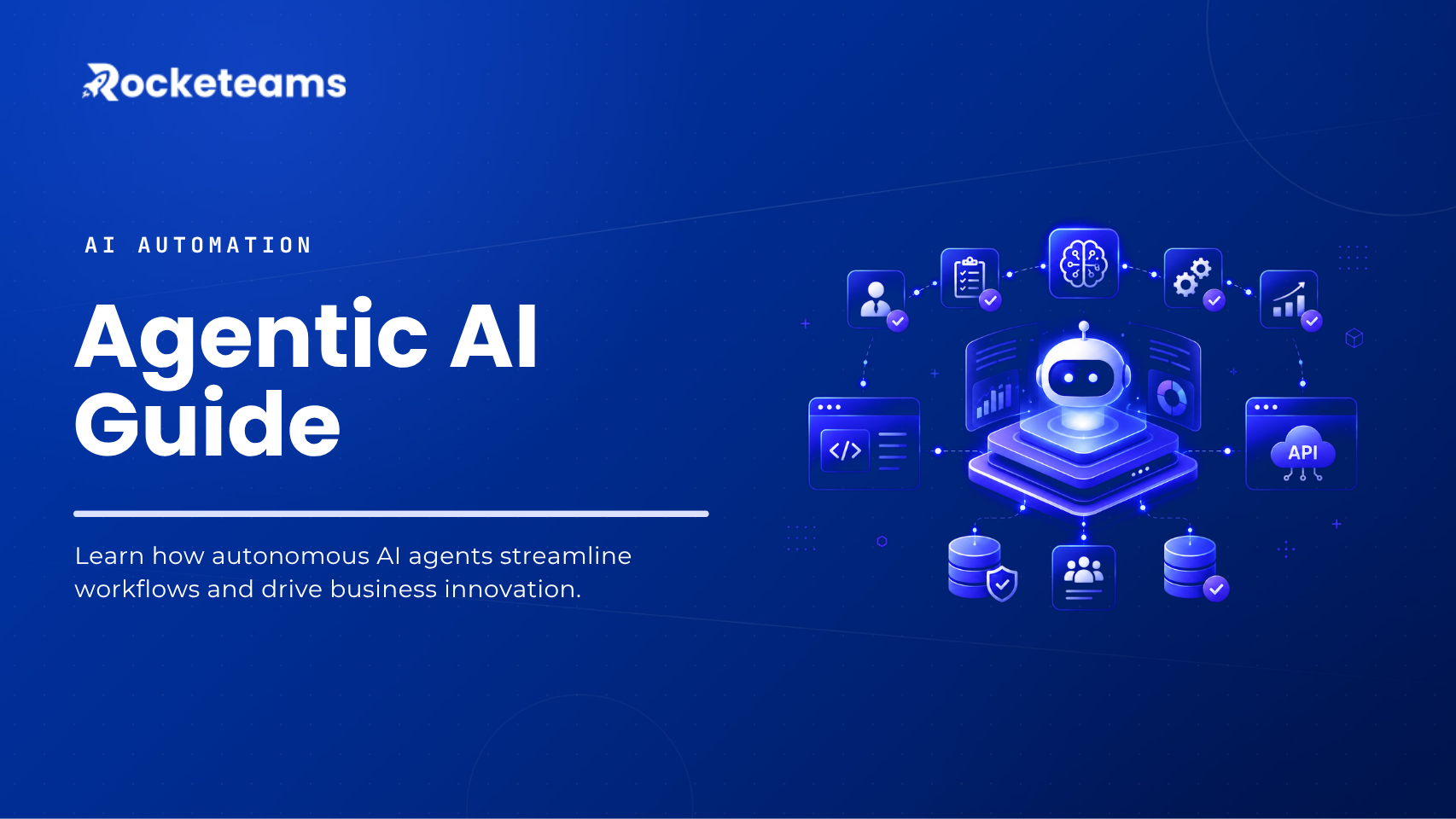
Agentic AI refers to AI systems capable of pursuing goals autonomously rather than simply responding to prompts. Unlike conventional AI models that operate on a single input-output interaction, agentic systems can:
- Plan tasks
- Execute actions
- Use tools
- Access external systems
- Remember previous steps
- Adapt when conditions change
- Continue working toward an objective until completion
An AI agent receives a goal rather than a prompt. It then determines how to achieve that goal through a sequence of actions.
Conventional AI vs Agentic AI
A traditional AI system works like this:
Input → Output
A user provides information and receives a response. An autonomous AI agent works differently:
Goal → Plan → Action → Observation → Adjustment → Completion
The AI continuously evaluates whether it has achieved the intended objective and adapts when necessary. That distinction is what makes AI-driven decision making operationally valuable in enterprise environments.
The Three Capabilities That Define Agentic Systems
Three capabilities separate Agentic AI from conventional AI.
Tool Use
AI agents can interact with real systems rather than simply generating text. They may:
- Query databases
- Call APIs
- Send emails
- Execute code
- Read documents
- Update records
- Create tickets
- Write files
This allows AI workflow automation to extend across multiple applications and departments.
Memory
Traditional AI interactions are usually stateless. Agentic systems maintain memory throughout the workflow, allowing them to retain context, reference earlier actions, and continue operating without repeatedly starting from scratch.
Planning
Autonomous agents can break large objectives into smaller actions. They evaluate results, adjust strategies, and continue progressing toward the goal even when intermediate steps do not go exactly as expected. Planning is what transforms AI from a tool into an operational system.
Agentic AI vs Traditional AI vs RPA
Businesses often compare Agentic AI with Robotic Process Automation (RPA) or conventional AI models. Although all three automate work, they solve fundamentally different problems.
| Dimension | Traditional AI | RPA | Agentic AI |
|---|---|---|---|
| Primary Function | Generates content or predictions | Automates repetitive, rule-based tasks | Executes end-to-end workflows autonomously |
| Handles Unstructured Data | ✓ Yes | ~ Limited | ✓ Yes |
| Tool / API Integration | ✗ Minimal | ~ UI automation only | ✓ APIs, databases, apps, code |
| Maintains Memory | ✗ No | ✗ No | ✓ Yes — retains context across steps |
| Decision-Making | Limited | Rule-based only | Goal-driven and adaptive |
| Exception Handling | Limited | ✗ Usually fails | ✓ Escalates to humans when needed |
| Best Suited For | Content generation, classification, prediction | High-volume, stable, repetitive tasks | Complex, multi-system, multi-step workflows |
Traditional AI creates outputs. RPA follows scripts, but Agentic AI executes workflows. That is why Autonomous enterprise AI is increasingly viewed as the next evolution of business automation rather than a replacement for existing AI systems.
When Should You Use Traditional AI?
Traditional AI is ideal when the goal is to generate information rather than complete actions. Human involvement remains necessary after every output. Examples include:
- Content generation
- Language translation
- Summarization
- Predictions
- Recommendations
When Should You Use RPA?
However, RPA struggles when business processes change frequently or require contextual decision-making. Robotic Process Automation excels when workflows are:
- Highly repetitive
- Rules-based
- Stable
- Performed within a single application
When Should You Use Agentic AI?
Instead of replacing traditional AI or RPA, agentic AI complements both technologies by orchestrating complete business processes. Agentic AI for business is most effective when workflows require:
- Multiple decision points
- Dynamic planning
- External tool usage
- Cross-system coordination
- Human escalation for exceptions
Where Does Agentic AI Deliver the Highest Business Value?
Not every business process should be automated. Agentic AI for business delivers the greatest return when workflows involve multiple sequential steps, require data from several systems, follow defined business rules, and currently rely on significant human coordination. These characteristics make them ideal candidates for AI workflow automation.
Below are the business functions where autonomous AI agents are creating the most measurable operational impact.
Customer Service and Support
Customer experience and service is one of the strongest Agentic AI use cases because resolving a single customer request often requires multiple actions across different systems. A typical support workflow may involve:
- Retrieving customer records
- Checking billing history
- Reviewing company policies
- Determining eligibility
- Updating CRM records
- Sending confirmation emails
- Scheduling follow-ups
Traditionally, these steps are handled manually by customer support representatives. An agentic system can execute the same workflow autonomously while escalating only exceptional cases that require human judgment. This reduces response times, improves consistency, and enables customer support teams to focus on complex interactions.
According to McKinsey, AI-enabled customer service operations have demonstrated:
- 30–40% reduction in average handling time
- 15–25% improvement in first-contact resolution rates
For organizations handling thousands of support requests each month, these improvements translate into substantial operational savings.
Finance, Procurement, and Document Processing
Finance departments process large volumes of repetitive, document-heavy workflows every day. Common examples include:
- Invoice processing
- Purchase order validation
- Expense approvals
- Contract reviews
- Vendor onboarding
- Compliance documentation
These workflows require employees to review documents, validate information, update financial systems, route approvals, and manage exceptions.
Instead of automating only individual tasks, business process agents can orchestrate the entire workflow. For example, an autonomous finance agent can:
- Extract invoice data.
- Match invoices with purchase orders.
- Identify discrepancies.
- Route exceptions for approval.
- Update accounting systems.
- Notify stakeholders.
Organizations implementing AI-driven decision making in finance report 60–80% reductions in manual processing time for routine transactions, allowing finance teams to focus on exception handling and strategic work.
IT Operations and Incident Response
IT operations rely heavily on repeatable diagnostic procedures. When an alert is triggered, engineers typically:
- Review monitoring dashboards
- Investigate logs
- Identify root causes
- Apply standard fixes
- Verify resolution
- Update incident records
These tasks are structured, repetitive, and time-sensitive, making them ideal for autonomous enterprise AI. Rather than waiting for engineers to respond, an AI agent can:
- Detect incidents
- Collect diagnostic information
- Execute approved remediation scripts
- Validate system recovery
- Document completed actions
This enables faster incident resolution while allowing IT teams to concentrate on complex or high-risk issues.
Sales and Revenue Operations
Sales teams spend significant time on administrative work instead of selling. Examples include:
- Lead qualification
- CRM updates
- Prospect research
- Email personalization
- Lead routing
- Competitive intelligence
- Follow-up scheduling
These repetitive processes often delay sales engagement. Autonomous AI agents can continuously monitor incoming leads, enrich customer profiles, score prospects, assign opportunities to sales representatives, and trigger personalized outreach based on predefined business rules. The result is faster response times, cleaner CRM data, and more productive sales teams.
Human Resources and Employee Operations
Although not every HR process should be fully autonomous, many routine administrative workflows are suitable for agentic systems.
Examples include:
- Employee onboarding
- Policy document distribution
- Leave request processing
- IT access provisioning
- Benefits enrollment reminders
- Internal knowledge retrieval
Rather than replacing HR professionals, AI agents automate administrative coordination, allowing HR teams to focus on employee engagement and strategic initiatives.
Supply Chain and Operations
Organizations with complex supply chains often coordinate multiple systems across procurement, logistics, warehousing, and inventory management. Agentic AI can automate workflows such as:
- Inventory monitoring
- Purchase order generation
- Supplier communication
- Shipment tracking
- Delivery exception handling
- Restocking decisions
Because these workflows involve numerous interconnected decisions, they are well suited for AI workflow automation.
Should You Build a Single Agent or a Multi-Agent AI System?
One of the earliest architectural decisions is determining whether your organization needs a single AI agent or a coordinated network of multi-agent AI systems.
Single-Agent Systems
A single autonomous AI agent is responsible for one business function from start to finish. Single-agent deployments are typically faster, less expensive, and easier to govern. Examples include:
- Customer support
- Invoice processing
- Procurement approvals
- Lead qualification
Multi-Agent AI Systems
Large enterprises often require multiple specialized agents working together. For example:
- A customer support agent resolves inquiries.
- A finance agent processes refunds.
- A CRM agent updates customer records.
- A reporting agent generates management dashboards.
Each agent focuses on its area of expertise while collaborating to complete broader workflows. This modular architecture improves scalability, simplifies maintenance, and enables organizations to expand automation incrementally rather than replacing existing systems all at once.
Which Business Processes Should You Automate First?
For organizations beginning their Agentic AI deployment, the best starting point is usually a workflow that:
- Has clearly defined business rules.
- Requires multiple manual steps.
- Generates high operational costs.
- Produces measurable KPIs.
- Can safely operate with limited autonomous authority.
Starting with a focused, high-volume workflow allows businesses to validate ROI, refine governance processes, and establish the architectural foundation for broader enterprise-wide automation before expanding to additional use cases.
How Do You Implement Agentic AI in Your Business?
Successful Agentic AI implementation is not about deploying the most advanced model. It begins with selecting the right business process, defining clear governance, and integrating AI agents into existing enterprise systems.
Rather than replacing entire departments overnight, most organizations start with a single high-value workflow, validate results, and expand incrementally.
Step 1: Identify High-Impact Automation Opportunities
Not every process should be autonomous. The best candidates for AI workflow automation typically:
- Follow repeatable business rules.
- Involve multiple manual steps.
- Require data from several systems.
- Consume significant employee time.
- Generate measurable business outcomes.
Starting with one well-defined workflow minimizes implementation risk while providing measurable ROI. Examples include:
- Customer support ticket resolution
- Invoice processing
- Employee onboarding
- Purchase approvals
- Lead qualification
- IT incident response
Step 2: Define Decision Boundaries
One of the biggest misconceptions about autonomous AI agents is that they operate without limits. In reality, successful deployments establish clear decision boundaries that determine:
- What the AI agent can do independently.
- When human approval is required.
- Which actions are prohibited.
- How exceptions should be handled.
Human oversight remains essential for high-risk, financial, legal, and compliance-sensitive decisions. For example:
| AI Action | Autonomous | Human Approval Required |
|---|---|---|
| Update CRM | ✓ | — |
| Generate Reports | ✓ | — |
| Schedule Appointments | ✓ | — |
| Process Customer Refund | Limited | ✓ Above threshold |
| Approve Financial Transactions | — | ✓ |
| Modify Legal Contracts | — | ✓ |
Step 3: Integrate Enterprise Systems
An AI agent becomes valuable only when it can interact with the systems your business already uses. Common integrations include:
- CRM platforms
- ERP systems
- HR software
- Accounting platforms
- Knowledge bases
- Cloud storage
- Email platforms
- Internal APIs
- Business intelligence tools
Instead of replacing existing software, agentic systems orchestrate workflows across multiple applications through secure API integrations. This allows organizations to improve operations without rebuilding their technology stack.
Step 4: Test Before Production
AI agents should never be deployed directly into production. Testing ensures the agent behaves predictably before interacting with customers or critical business systems. Before launch, organizations should validate:
- Workflow accuracy
- Decision consistency
- API reliability
- Exception handling
- Security controls
- Performance under load
- Human escalation logic
Step 5: Monitor, Learn, and Improve
Agentic AI is not a “set and forget” technology. Regular reviews help refine workflows, improve decision quality, and identify new automation opportunities as business requirements evolve. Once deployed, organizations should continuously monitor:
- Task completion rates
- Error rates
- Escalation frequency
- Processing time
- Business KPIs
- User feedback
How Long Does Agentic AI Implementation Take?
Implementation timelines vary depending on the complexity of the workflow, integration requirements, and organizational readiness. Organizations with mature APIs, centralized data, and well-documented processes generally deploy faster than businesses with fragmented legacy systems.
Bar length is proportional to the upper end of each project type’s timeline range.
What Does Agentic AI Cost?
The investment required depends on the number of workflows, integrations, compliance requirements, and level of customization. Costs should be evaluated against long-term operational savings, productivity improvements, and scalability rather than development expenses alone.
| Engagement | Typical Investment (USD) |
|---|---|
| Discovery & AI Strategy | $10,000–$40,000 |
| Proof of Concept | $30,000–$100,000 |
| Single Workflow Deployment | $50,000–$150,000 |
| Enterprise Implementation | $150,000–$1M+ |
Security and Governance Considerations
As AI agents gain the ability to execute business actions, governance becomes just as important as technical capability. Every action performed by an AI agent should be traceable, explainable, and auditable to maintain trust and meet compliance requirements. Organizations should establish policies covering:
- Role-based permissions
- API authentication
- Audit logging
- Human approval workflows
- Data privacy
- Regulatory compliance
- Model monitoring
- Access controls
Common Challenges During Agentic AI Adoption
While the technology is advancing rapidly, implementation challenges remain. Organizations that address these issues early are more likely to achieve successful long-term adoption. The most common obstacles include:
- Poor data quality
- Legacy system integration
- Undefined business processes
- Lack of governance
- Employee resistance to change
- Unrealistic expectations
- Limited internal AI expertise
Measuring ROI from Agentic AI
The success of an Agentic AI implementation should be measured using business outcomes rather than technical metrics alone. Tracking these metrics before and after deployment provides a clear view of the value generated by autonomous AI agents. Common KPIs include:
| Business Goal | Example KPI |
|---|---|
| Operational Efficiency | Reduced processing time |
| Cost Reduction | Lower cost per transaction |
| Customer Service | Faster response and resolution times |
| Employee Productivity | More high-value work completed |
| Revenue Growth | Increased conversions or sales |
| Process Quality | Fewer manual errors |
Why a Phased Rollout Delivers Better Results
This approach reduces implementation risk, builds organizational confidence, and creates a repeatable framework for scaling Agentic AI for business across the enterprise. Rather than attempting enterprise-wide automation immediately, successful organizations adopt a phased approach:
- Assess AI readiness.
- Select one high-value workflow.
- Launch a pilot.
- Measure business outcomes.
- Refine governance.
- Expand to additional departments.
Why Choose Rocketeams for Agentic AI Consulting?
Implementing Agentic AI for business requires more than deploying AI models but it demands a deep understanding of business processes, enterprise architecture, security, and change management.
At Rocketeams, we help organizations design, build, and scale autonomous AI solutions that deliver measurable business outcomes. Our consultants work closely with your team to identify high-impact automation opportunities, develop AI strategies, integrate enterprise systems, and establish governance frameworks that ensure secure and responsible AI adoption.
Our Agentic AI services include:
- AI readiness assessments
- Agentic AI strategy and roadmap development
- Autonomous AI agent development
- Multi-agent AI system architecture
- Enterprise workflow automation
- AI integration with CRM, ERP, and internal platforms
- AI governance and compliance
- Security, monitoring, and optimization
- Ongoing AI consulting and support
Whether you’re automating a single workflow or deploying enterprise-wide AI agents, Rocketeams helps you reduce operational costs, improve efficiency, and scale AI with confidence.
Conclusion
Agentic AI represents the next evolution of enterprise automation. Unlike traditional AI systems that simply generate insights, autonomous AI agents can plan, execute, and optimize complete business workflows with minimal human intervention.
Organizations that adopt Agentic AI strategically can improve operational efficiency, reduce costs, accelerate decision-making, and free employees to focus on higher-value work. Success, however, depends on selecting the right use cases, implementing strong governance, and scaling incrementally.
At Rocketeams, we help businesses transform AI from a productivity tool into an operational advantage through practical consulting, secure implementation, and long-term optimization.
FAQs
What is Agentic AI, and how is it different from traditional AI?
Agentic AI uses autonomous AI agents to plan, make decisions, and complete multi-step workflows, while traditional AI typically generates content or predictions that still require human action.
Which business processes are best suited for Agentic AI?
The best Agentic AI use cases involve repetitive, rule-based workflows such as customer support, finance, procurement, IT operations, and AI workflow automation across multiple business systems.
How long does it take to implement Agentic AI?
A typical Agentic AI implementation takes 6–10 weeks for a pilot and 6–12 months for enterprise deployment, depending on workflow complexity, integrations, and organizational readiness.
Is Agentic AI secure for enterprise use?
Yes, when deployed with proper AI governance, role-based access controls, audit logs, secure API integrations, and human approval workflows. Enterprise Agentic AI should always include continuous monitoring and compliance controls.
How much does Agentic AI implementation cost?
The cost of Agentic AI for business depends on project scope, integrations, and customization. Pilot projects generally start around $30,000–$100,000, while enterprise implementations require larger strategic investments.
Can Agentic AI replace Robotic Process Automation (RPA)?
Not entirely. Agentic AI complements RPA by handling dynamic decision-making and complex workflows, while RPA remains effective for repetitive, rule-based tasks with minimal variation.
What industries benefit most from Agentic AI?
Industries including healthcare, finance, manufacturing, retail, logistics, and customer service benefit significantly from autonomous AI agents, particularly where complex workflows and high-volume operations exist.
How do I know if my business is ready for Agentic AI?
Organizations are ready for Agentic AI implementation when they have clearly defined workflows, reliable business data, measurable objectives, and leadership committed to responsible AI adoption.