Every startup hits the same wall eventually. The product roadmap is ready to move, but the in-house team doesn’t have the bandwidth or the specific skill set to get it there. Hiring full-time feels slow and expensive. Doing nothing isn’t an option either.
This is where IT resource augmentation has become a practical answer for a lot of founders and CTOs, not because it’s trendy, but because the math works. You get the technical capacity you need when you need it, without taking on the long-term cost structure of a traditional hire.
Here’s what that actually looks like in practice, and where the real savings come from.
What is IT Resource Augmentation, and How is It Different From Outsourcing?
IT resource augmentation means bringing in external technical professionals, developers, DevOps engineers, QA specialists, and security experts to work alongside your existing team for a defined period. They’re not a separate vendor team working off in isolation. They report into your structure, use your tools, and follow your processes.
That distinction matters more than it sounds like it should.
How IT Resource Augmentation Works
A startup identifies a gap, say, they need a senior backend engineer for four months to ship a payments integration. Instead of running a full hiring cycle, they bring in a vetted engineer through an augmentation partner. That engineer joins daily standups, works inside the company’s codebase, and answers to the same engineering lead as everyone else on the team.
The startup keeps full control over the work. The augmentation partner handles sourcing, vetting, and the administrative load of contracts and payroll.
Where It Differs From Traditional Outsourcing or Full-Time Hiring
Outsourcing typically hands off an entire project or function to an external team that manages it independently and delivers a result. Augmentation keeps the work and the decision-making inside your company. You’re adding hands, not handing off ownership.
Full-time hiring solves a different problem. It’s right when you have sustained, long-term demand for a specific role. Augmentation solves the in-between problem: real work that needs to get done now, without certainty that the need will still be there in a year.
Why Does Hiring In-House IT Talent Strain a Startup’s Budget?
This is the part most founders underestimate until they’re a few hires into it. The advertised salary is rarely the real cost.
The Hidden Costs Behind a Full-Time Hire
A senior software engineer in the US might come with a base salary of $140,000, but the actual cost to the company runs well past that once you factor in payroll taxes, health benefits, equipment, software licenses, and recruiting fees. Industry estimates from SHRM put the average cost-per-hire across industries at around $4,700, and that’s before any of the ramp-up time is accounted for.
Then there’s the time cost. A typical technical hire in the US takes somewhere between 36 and 45 days from job posting to offer acceptance, according to data from LinkedIn’s Talent Solutions team. For a startup racing toward a launch date or a funding milestone, that’s not a rounding error. That’s a quarter of the runway spent waiting for someone to start.
And once they do start, they’re not productive on day one. Most new technical hires take two to three months to reach full productivity, which means you’re paying full salary for partial output during the exact period when speed matters most.
Why Skill Gaps Hit Startups Harder Than Enterprises
A 200-person enterprise can absorb a six-month hiring delay for a niche role. A 12-person startup usually can’t. When the one person who understands Kubernetes leaves, or the team realizes nobody on staff has built a SOC 2-compliant data pipeline before, that gap stalls the whole roadmap.
Enterprises also have the luxury of internal mobility, moving someone from another team to plug a gap temporarily. Startups rarely have that depth on the bench. The skill gap isn’t an inconvenience. It’s often the single thing standing between the current sprint and the next one.
What Are the 5 Cost-Saving Benefits of IT Resource Augmentation?
This is where the financial case becomes concrete. Each of these benefits addresses a different cost center that startups tend to underbudget for.
1. Lower Overhead Compared to Full-Time Hiring
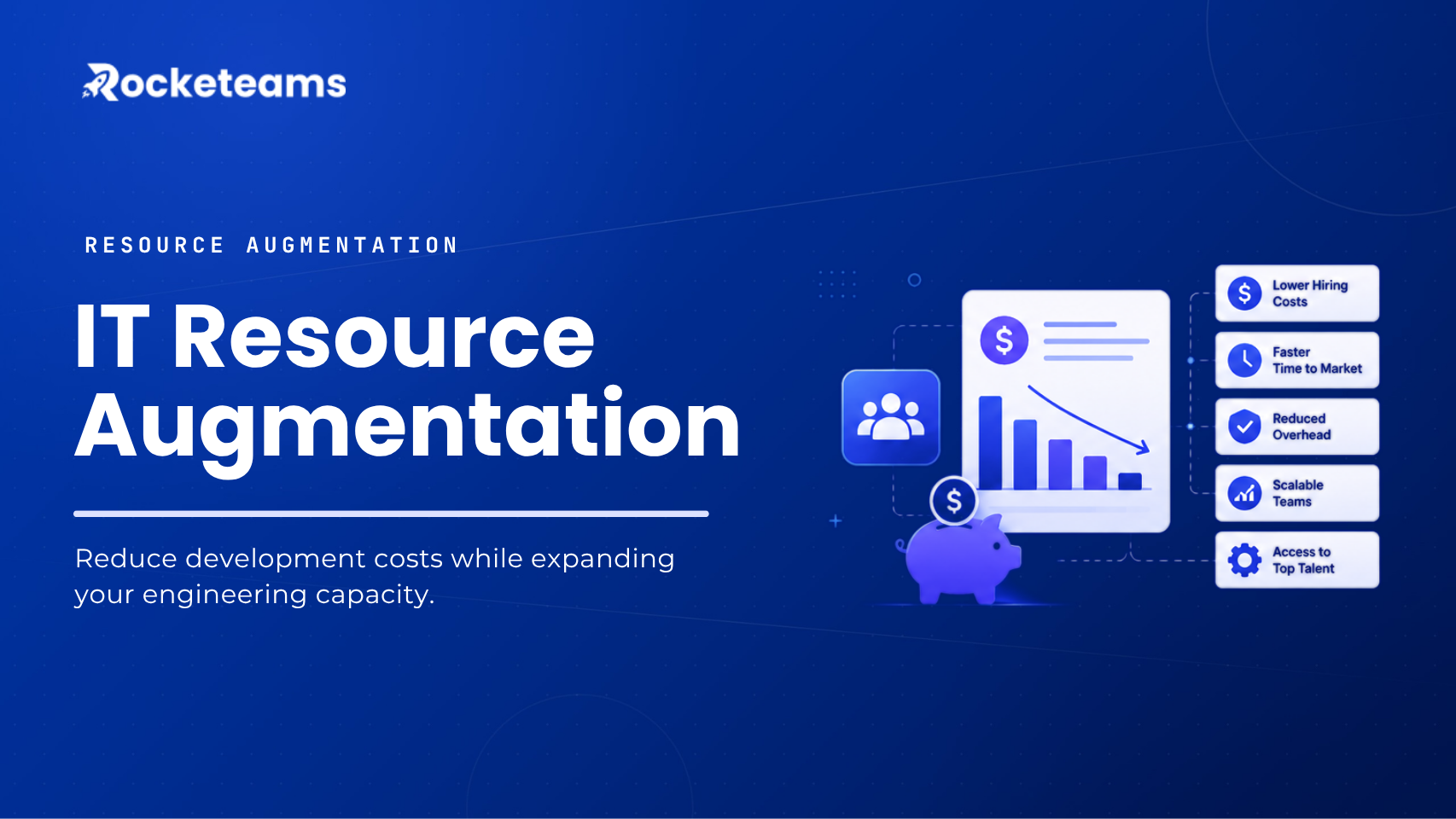
Augmented IT professionals come without the overhead that follows a full-time employee, no benefits package, no payroll tax obligations on your end, no equipment procurement, no long-term severance exposure if the project ends early. You’re paying for time and expertise, not for the infrastructure of employment.
For early-stage companies, this difference alone can shift a hiring decision from “we can’t afford this role yet” to “we can bring in exactly the skill set we need for exactly as long as we need it.”
2. Access to Specialized IT Roles Without Long-Term Commitment
Not every technical need justifies a permanent hire. A startup might need a machine learning engineer for a three-month model deployment, or a security specialist to run a single compliance audit. Augmentation gives access to specialized IT roles, cloud architects, data engineers, and mobile developers without requiring the company to justify a permanent headcount line for a temporary need.
This matters because specialized talent is expensive to recruit and even harder to keep busy full-time if the work is project-based rather than ongoing.
3. Faster Time-to-Hire and Reduced Project Delays
Vetted IT experts sourced through an augmentation partner are typically available in days, not the five to six weeks a traditional hiring cycle takes. That speed translates directly into cost savings, because every week a critical role sits open is a week of stalled progress on whatever that role was meant to unblock.
For a startup trying to hit a fundraising milestone or a product launch date, the cost of delay often outweighs the cost of the role itself.
4. Flexible Scaling Up or Down Based on Project Needs
IT staff scaling through augmentation means a startup can expand its technical capacity during a heavy build phase and scale back down once that phase ends, without the cost or complexity of layoffs. A team might bring in four additional engineers for a major platform migration and release three of them once it’s done, retaining only what’s actually needed going forward.
This flexibility prevents the common startup trap of over hiring during a growth sprint and then carrying that payroll burden long after the urgent work is finished.
5. Reduced Risk on High-Stakes Technical Projects
When a startup takes on unfamiliar technical territory, a new cloud migration, a first-time compliance certification, or an unfamiliar tech stack inherited through an acquisition, bringing in specialists who’ve done it before measurably reduces the risk of costly missteps. Vetted IT experts have typically solved the exact problem a startup is facing for the first time, which means fewer expensive mistakes and less rework.
The cost-saving angle here is less obvious but just as real. A failed migration or a botched compliance audit doesn’t just cost money to fix. It costs the time and credibility that startups can least afford to lose.
How Should Startups Choose the Right IT Resource Augmentation Partner?
The savings outlined above only materialize if the augmentation partner is actually good. A poor match erases most of the cost advantage through rework, miscommunication, or technical gaps that surface mid-project.
Vetting Process and Technical Proficiency
Ask specifically how candidates are evaluated before being presented. A credible partner can describe their screening process in detail, technical assessments, live coding evaluations, and reference checks, rather than offering vague assurances about “top talent.” Request examples of past placements in roles similar to what you need.
Engagement Models and Pricing Transparency
Pricing structures vary. Some partners bill hourly while others offer monthly retainers or fixed-scope arrangements. Get clear, upfront numbers tied to specific roles and timeframes before committing, and confirm there are no hidden costs around onboarding, replacement, or early termination.
Onboarding and Integration Practices
Ask how the partner handles the first two weeks. A strong onboarding process gets an augmented professional contributing to actual work within days, with clear documentation handoff, access provisioning, and a defined point of contact if something isn’t working. If a partner can’t describe this process clearly, that’s worth noting before signing anything.
Conclusion
IT resource augmentation isn’t a stopgap measure that startups grow out of once they can afford real hires. For a lot of fast-moving technical teams, it’s becoming a permanent part of how they staff, a way to keep core teams lean while flexing technical capacity up and down as the roadmap demands.
The startups getting the most out of this model aren’t using it to avoid hiring. They’re using it to make better hiring decisions, bringing in the right specialized skill set at the right moment, without betting months of runway on a role that might not be needed in its current form a year from now.
FAQs
How does IT resource augmentation specifically address skill gaps within our in-house IT department?
It lets you bring in specialists with the exact technical skill set you’re missing, without retraining existing staff or waiting on a lengthy hire. You get the gap closed in days rather than months.
What are the typical engagement models and pricing options for IT resource augmentation services?
Most providers offer hourly, monthly retainer, or fixed-scope pricing depending on project length and role. The right model depends on whether your need is ongoing or tied to a specific deliverable.
Can you outline the onboarding process for augmented IT resources to ensure seamless integration with our projects?
A solid process includes access provisioning, documentation handoff, and a clear point of contact within the first week. Most augmented professionals are contributing to real work within days, not weeks.
What guarantees do you offer regarding the technical proficiency and experience of your augmented IT staff?
Reputable partners vet candidates through technical assessments, live evaluations, and reference checks before presenting them. Ask for details on this process and examples of similar past placements.
How can IT resource augmentation help us accelerate project timelines and achieve our development goals faster?
By cutting hiring time from weeks to days and adding specialized skills exactly when needed, augmentation removes the bottleneck of waiting for the right person to start. That speed compounds across every milestone tied to that role.